 Monthly Special —

Water is the first thing your family needs in an emergency — and the easiest to overlook. Puravai emergency drinking water is purified, mineralized and packaged for long-term storage, with a 20-year shelf life and a 20-year warranty. This guide explains why stored water matters, how much to keep, and how to store it properly.
Why stored water matters
Food storage gets most of the attention, but water is more urgent. A person can survive weeks without food, but only a few days without water. And tap water is not guaranteed in an emergency: pipes break, treatment plants lose power, boil-water notices are issued, and floods can contaminate a municipal supply overnight. When that happens, stores sell out fast — and a family without water has a problem that no amount of freeze-dried food can solve.
Stored water is also your most flexible supply. You need it for drinking, cooking (rehydrating freeze-dried meals takes water), cleaning and sanitation. Plan for all of it, not just drinking.
What is Puravai water?
Puravai is emergency drinking water made for decades of storage:
- 20-year shelf life and 20-year warranty — the longest-lasting stored water we have found, so you buy it once and stop worrying about rotation.
- Purified and mineralized — filtered and then re-mineralized for a clean, fresh taste, even after years in storage.
- Triple-sealed, no seams — the bottles are built to resist leaks and keep contaminants out.
- Thick HDPE bottles — rugged food-grade plastic that stands up to being stored, stacked and moved.
- Bacteria-free — purified and sealed so it stays safe for decades.
It is the water we pair with Ready Harvest food: freeze-dried meals need water to prepare, so food and water planning go together.
How much water should you store?
Plan on at least 2 gallons per person per day — one gallon for drinking and one gallon for cooking, cleaning and sanitation — and store a minimum two-week supply. That adds up faster than most people expect:
- 1 person, 2 weeks: 28 gallons
- 2 people, 2 weeks: 56 gallons
- Family of 4, 2 weeks: 112 gallons
- Family of 4, 1 month: 224 gallons
Children, pets and hot climates all raise the number. If you also cook freeze-dried meals every day, remember that rehydrating food uses part of your water — another reason to aim above the minimum.
How to store emergency water
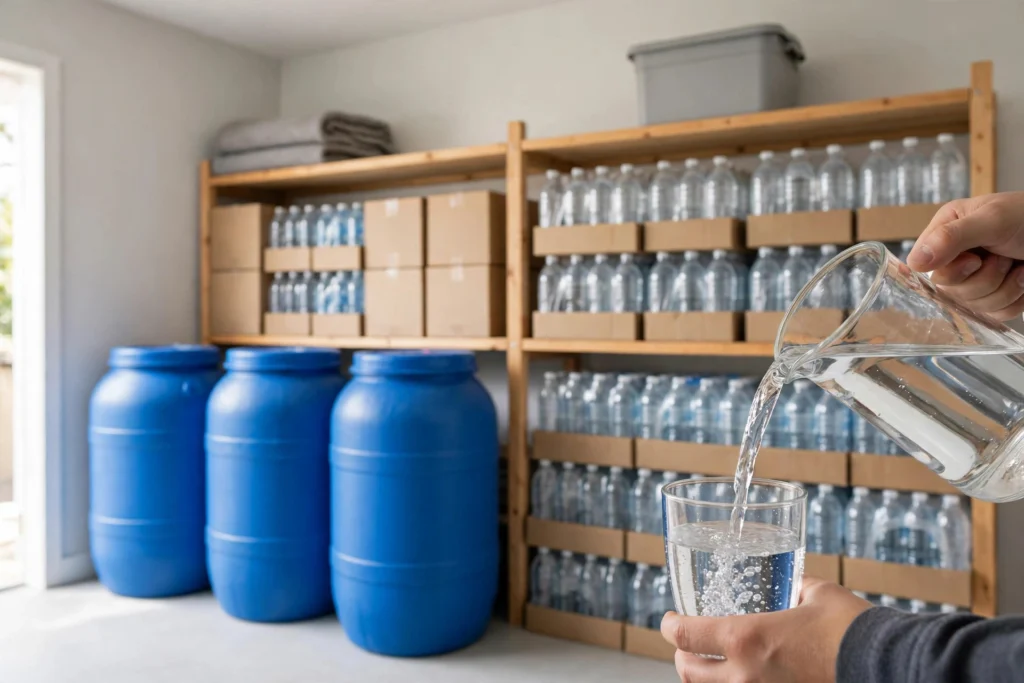
- Keep it cool and dark — a basement, closet or garage shelf away from sunlight and chemicals.
- Store above freezing (33°F and up) — frozen bottles can crack and leak.
- Keep it off bare concrete — use a pallet, shelf or cardboard layer so the bottles do not pick up odors or chemicals from the floor.
- Do not stack heavy items on top — Puravai bottles are rugged, but crushing weight can still damage seals.
- Keep some water where you can reach it — a case in the kitchen or pantry is useful for everyday disruptions; the bulk of your supply can live in longer-term storage.
Water and food go together
Your food plan and your water plan are one plan. A 1-Month Bulk Pack for one person needs water for 30 days of meals as well as drinking. Work out your food goal with our Food Storage Calculator, plan your water alongside it, and consider a Bulk Pack to cover the food side in the same order.
Affiliate disclosure: Thrive Freeze Dried is an affiliate of Thrivalist. If you buy through links on this page, we may earn a commission at no extra cost to you.